
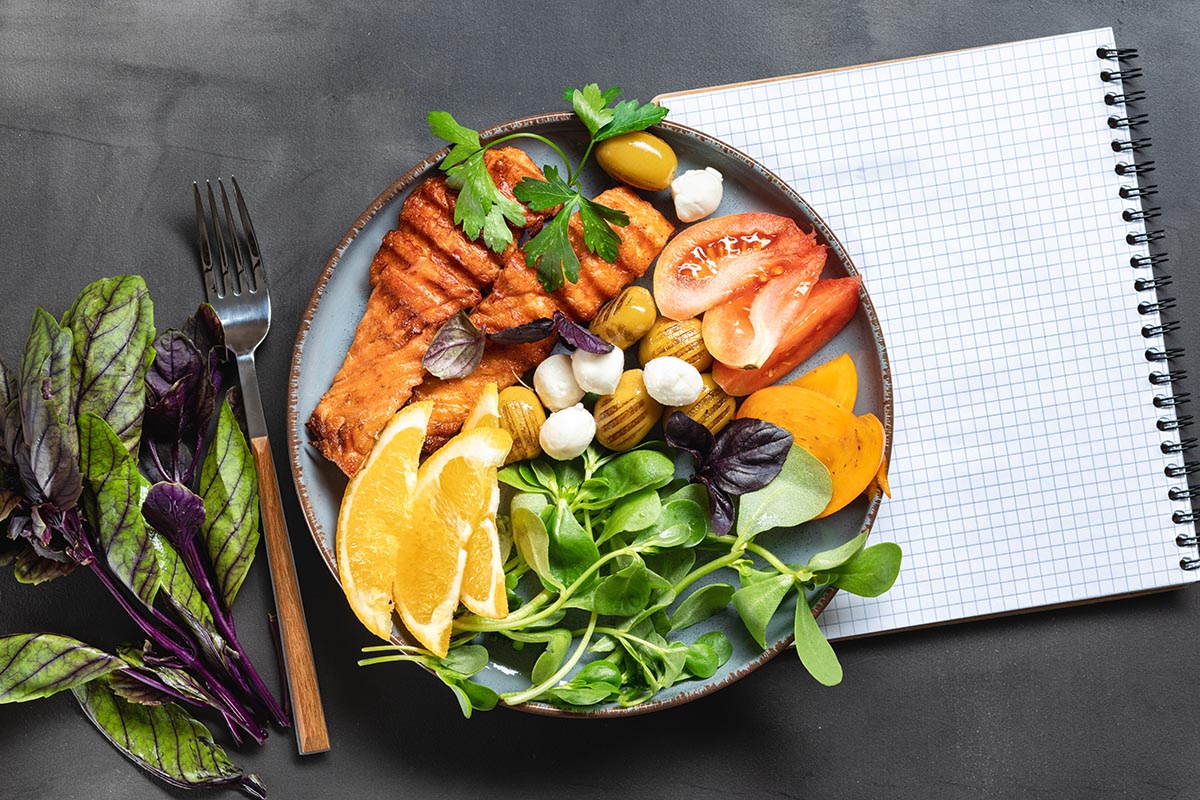

Cooking can be a chore. Even more so when you have dietary constraints. One important part of meal planning as a diabetic is balancing carbohydrate intake. Carbohydrates, starch and sugar should be eaten in moderation to help manage blood sugar spikes. Meal planning can take the guesswork out of building a healthy meal. This is where the Diabetes Plate Method comes in.
The American Diabetes Association devised this method to make meal planning easy for people trying to manage their blood sugar. The Diabetes Plate Method to create a well-balanced meal is simple. There is no calorie counting, weighing or calculating. All you need is a decently sized plate (9 inches) to follow these straightforward instructions:
- Fill half the plate with non-starchy vegetables
Non-starchy vegetables tend to be lower in carbohydrate so blood sugar should not spike too much. They are usually also high in vitamins and minerals not to mention fiber which makes them a great source of essential nutrients. Asparagus, broccoli, carrots and spinach are all non-starchy vegetables. - Fill one quarter of the plate with lean protein
Protein is an essential building block for bones, muscles, cartilage and skin. However some protein sources contain saturated fat which can increase your risk of heart disease. Lean proteins are lower in fat which make them an overall better choice. Chicken, turkey and eggs are all considered lean proteins. - Fill one quarter of the plate with carbohydrates
Grains such as bread, pasta and rice and fruit whether whole or dried, are higher in carbohydrates. Limiting the amount of carbohydrates to one quarter of the plate can help keep blood sugars lower after meals. - Drink water or a low-calorie beverage
While water is the best choice because it has no effect on blood sugar, unsweetened tea or coffee are also good options for a well-balanced meal.
There are endless meal combinations that can be made with these four instructions. Check out DiabetesFoodHub.org if you need inspiration for your next meal.