
Ergonomics plays a crucial role in promoting productivity, comfort and long-term health. It is the science of designing workspaces and tasks to fit the worker, and while the term often conjures images of adjustable office chairs and standing desks, ergonomics extends far beyond office environments. Whether you’re in a warehouse, a hospital or working remotely, applying and understanding the benefits of ergonomic principles in the workplace can prevent injuries and improve overall well-being.
Office Ergonomics
In office settings, prolonged sitting and repetitive tasks can lead to issues like back pain, carpal tunnel syndrome and eye strain. Key ergonomic interventions include:
- Chair and Desk Setup
Ensure that chairs provide lumbar support and allow feet to rest flat on the floor. Desks should be at elbow height when seated. - Footrests
Use an under-desk footrest so your thighs are parallel to the floor. Measuring just over 5’, I have found this one to be especially helpful! - Monitor Placement
Position monitors at eye level and about an arm’s length away to reduce neck strain and eye fatigue. - Keyboard and Mouse Usage
Use wrist rests to keep wrists in a neutral position. Your hands should be elevated above the rest while typing, and the pad should contact the heel or palm of your hand, not your wrist. - Movement Breaks
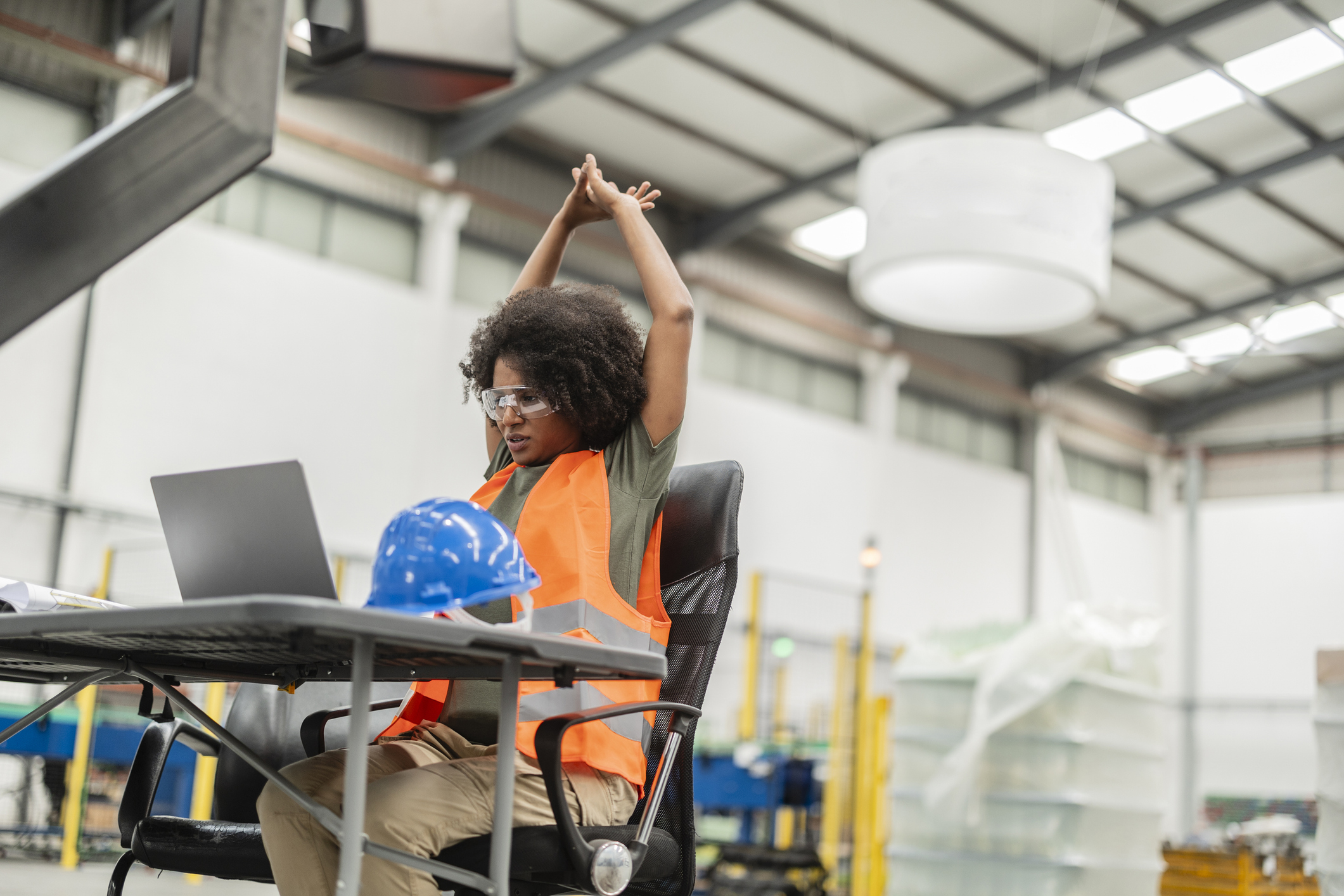
Take regular breaks to stretch and move around.
Warehouse and Industrial Settings
In physically demanding environments like warehouses, improper lifting techniques and repetitive movements can result in musculoskeletal disorders. Ergonomic practices include:
- Lift-Assisting Equipment
Use gear like forklifts, conveyor belts and adjustable height workbenches to minimize manual lifting. - Training
Learn proper lifting techniques, such as bending at the knees rather than the waist. See these tips from Safety Sign. - Anti-Fatigue Mats
Use mats to reduce discomfort for workers who stand for long periods. - Rotating Tasks
Alternate tasks to reduce repetitive strain on specific muscle groups.
Healthcare Environments
Healthcare workers often face unique ergonomic challenges, such as transporting patients or performing repetitive medical procedures. Best practices include:
- Patient Lifting Devices
Utilize hoists and slide sheets to reduce the physical strain on staff. - Adjustable Equipment
Ensure that examination tables and medical instruments are height-adjustable. - Ergonomic Footwear
Wear supportive shoes to reduce foot and back pain. EMS professionals I know recommend: Dansko, Crocs or Under Armour. - Body Mechanics Training
Use proper body mechanics when handling patients or equipment.
Remote Workspaces
For remote workers, makeshift workspaces can lead to poor posture and discomfort. Tips for improving ergonomics at home include:
- Ergonomic Furniture
Invest in a quality chair and desk or use cushions and books to achieve proper heights. - Laptop Stands
Use a laptop stand to elevate screens to eye level and an external keyboard for better wrist alignment. - Lighting
Ensure adequate lighting to reduce eye strain. - Movement
Set reminders to stand, stretch and walk periodically. I’m standing right now with my laptop on a riser as I type this!
Implementing ergonomic principles prevents injuries AND boosts morale & productivity.
The Benefits of Ergonomics
Workers who are comfortable and pain-free are more focused and efficient. Organizations that prioritize ergonomics often see reduced absenteeism, lower healthcare costs, and higher employee satisfaction.
By tailoring workspaces to meet the needs of employees across various settings, businesses can create healthier, more productive environments. Whether you’re sitting at a desk, lifting heavy items or working in a healthcare facility, ergonomics should be a cornerstone of your workplace design.
Sources:
International Ergonomics Association (IEA)
Occupational Safety and Health Administration (OSHA)
Mayo Clinic
National Institute for Occupational Safety and Health (NIOSH)
OSHA
Canadian Centre for Occupational Health and Safety (CCOHS)